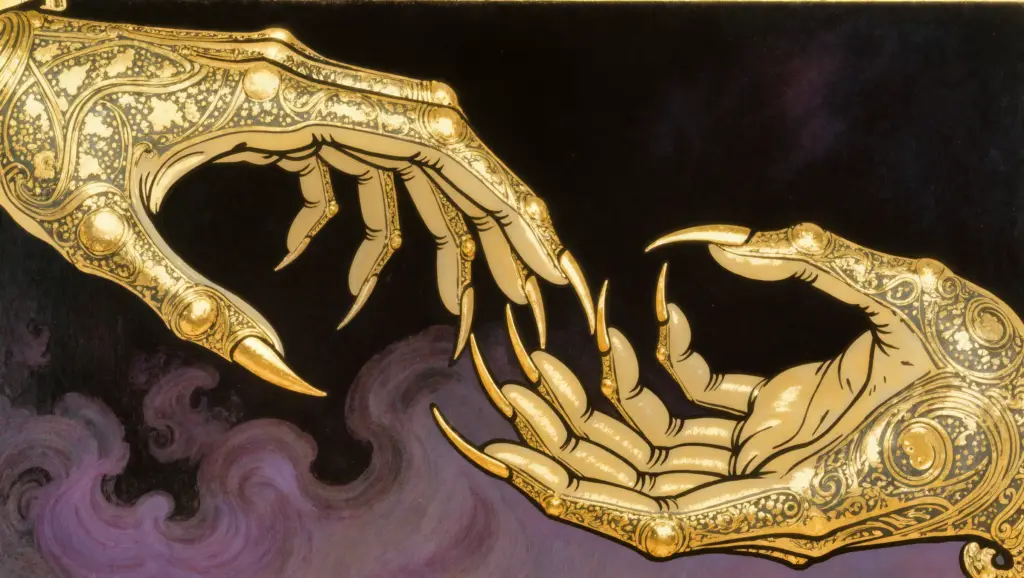
Every romance is secretly asking the same question: will you still want me once you truly see what I am. Most of the genre keeps that question metaphorical — a scar, a bad reputation, a failed marriage, something the hero has to learn to look past. Monster romance just stops pretending it is a metaphor. The hero has scales, or tusks, or too many limbs, or no face a human would call a face — and the book asks the question in the open: can you love this, all of it, on sight, with nothing hidden. I think that honesty is the real appeal, more than the fangs are.
It helps to say plainly what the genre is before recommending any of it. Monster romance pairs a human, or something human enough, with a love interest who is not — not humanoid-with-quirks, but properly other, and never quietly revealed to have been a man in a costume all along. That distinction matters more than it sounds like it should, because a lot of what gets marketed as monster romance is really paranormal romance with sharper teeth. The real thing keeps the monster a monster, right through the ending.
A word on spice, because this genre runs the entire range and the covers rarely warn you. On one end sits a story where the monster is essentially a very large, very anxious cinnamon roll who is terrified of scaring you. On the other end sits material I am not going to describe in a family-facing guide. Both are monster romance. Decide roughly where you want to sit before you pick a first book, the same as you would for any other corner of the genre — this is not the place to discover your limits by accident.
For the reader who wants comedy and warmth first
Start with Morning Glory Milking Farm by C.M. Nascosta. Violet is a broke, over-educated millennial who lands an unusual job in the monster-friendly town of Cambric Creek, working with a clientele that is, let us say, not human. What sells the book is not the premise, which is exactly as unsubtle as it sounds — it is that Violet’s real arc is a workplace-competence story with a heart, and the minotaur in question is gentle, a little awkward, and plainly smitten in a way that plays as sweet rather than absurd. It is the genre’s most-cited gateway for a reason: funny, warm, and a far softer landing than the premise implies.
For the reader who wants it dark and aching
Start with A Soul to Keep by Opal Reyne. Reia is offered up as the latest human sacrifice to Orpheus, a Duskwalker who has spent decades taking what his village hands over in exchange for protection from worse things. She expects cruelty. She does not find it. This is the atmospheric, slow-burn end of the genre — loneliness meeting loneliness, tenderness arriving where the reader was braced for a monster, in the most literal sense the trope allows.
For the reader who wants the “monster” barely visible at all
Start with Radiance by Grace Draven. A human woman and a Kai prince are married off to each other for the sake of peace between their peoples, and neither one finds the other remotely attractive on sight — which is the point. What grows instead is respect, then friendship, then something neither of them planned for, built entirely on who the other person is rather than what they look like. If the fangs-and-scales version of the genre is not for you but the underlying pull still sounds appealing, this is where I would send you first.
What the genre is doing
I keep coming back to the same idea: the monster is not an obstacle the heroine has to see past. The monster is the whole test. Nothing about him is hidden, nothing gets explained away by the end, and the falling in love has to happen with the difference fully visible the entire time, not despite it. That is a harder trick than a human hero requires, and when it works, it lands harder too, because the book never lets the reader pretend love here is easy or automatic. It has to be chosen, deliberately, every time.
New reading guides, reviews, and dispatches from inside the genre land twice a month. Subscribe, and I will keep finding the strange, tender ones worth your time.