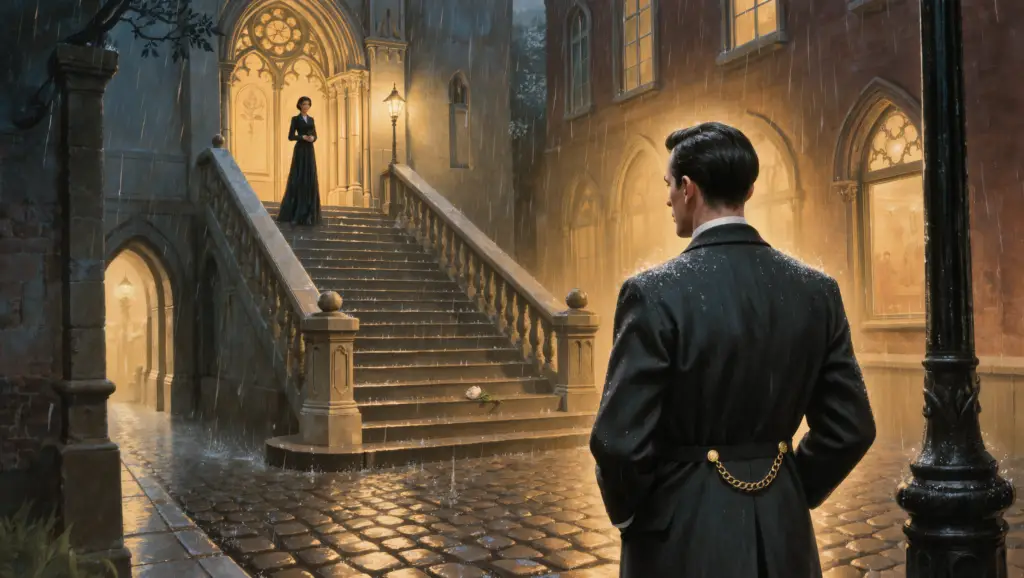
Mafia romance is one of the biggest engines in the whole genre right now, and it is also the corner where “dark” and “just plain bad” get confused most often. The label covers an enormous range — from arranged-marriage slow burns that are barely darker than a regular contemporary, to books that ask you to root for a man doing monstrous things. Some of it is superb. Some of it is grim in the worst sense: cruelty dressed up as devotion, with a heroine who exists mainly to absorb it.
The difference is not the body count. It is craft — whether the darkness is doing something, or just sitting there for shock. So this guide does two jobs. It gives you the books worth reading, arranged from lightest to darkest so you can find your own line, and it gives you a way to tell, before you commit three hundred pages, whether the dark book in your hands is a good one or a bad one wearing the same jacket.
Each pick below is marked with where it falls on the darkness scale, so nobody wanders into a captivity plot expecting a slow burn.
Brutal Prince by Sophie Lark
Where it lands: the shallow end — dark label, light water.
Best for: the reader who has heard “mafia romance” and wants to test the water before wading in. Aida Gallo is the wild youngest daughter of a Chicago Italian family; Callum Griffin is the cold heir to the rival Irish mob. After Aida crashes a Griffin party and accidentally sets the library on fire, their fathers force a marriage to stop an all-out war — and Aida celebrates the union by poisoning Callum on their wedding night. What follows is enemies-to-lovers with the emphasis on the enemies: banter, revenge plots, and two people who would rather kill each other than admit anything. Despite the “dark” branding, this one is a comedy of manners with weapons. It is the gentlest possible on-ramp, now being reissued by a traditional publisher, which makes it easy to find. Standalone with a real ending, moderate heat.
Painted Scars by Neva Altaj
Where it lands: low — a dark world, a tender centre.
Best for: the reader who wants the Bratva setting without the brutality pointed at the heroine. Nina is a cold-blooded killer who marries Roman, the head of the Russian Bratva, as part of a deal neither of them can walk away from — and then finds the ruthless man she feared is nothing like she expected. What makes this one interesting is the execution: the hero is physically disabled, the heroine is nobody’s victim, there is no cheating, and the darkness lives in the world around them rather than in how they treat each other. It is a useful proof of a point this list keeps making, which is that a dark setting and cruelty towards the heroine are two entirely separate things. This is the first in a long series that gets darker as it goes, but the opener stays a love story. Standalone within the series, guaranteed happy ending, high heat.
The Sweetest Oblivion by Danielle Lori
Where it lands: low-to-mid — dark register, romantic heart.
Best for: the reader ready for the genre’s modern flagship and a slow burn that leaves scorch marks. Elena Abelli is the “Sweet Abelli,” the perfect mafia daughter hiding a ruined reputation; Nicolas Russo is a Made Man and a boss whose reputation is darker than his suits. The catch is that Nico is arranged to marry Elena’s younger sister — so the pull between Elena and Nico is forbidden before it is anything else. This is the book most readers name as the gateway to mafia romance, and for good reason: the tension is exquisite, the violence is present but not the point, and the romance is doing the heavy lifting. Some readers find the mafia atmosphere fades as the love story takes over past the midpoint, which is either a feature or a flaw depending on what you came for. There is no cheating, whatever the setup implies. First in the Made series, dual point of view, high heat.
Ruthless Creatures by J.T. Geissinger
Where it lands: mid-to-high — properly dark, and properly well made.
Best for: the reader who wants proof that dark can also be good writing. Natalie is an art teacher jilted the day before her wedding five years ago, when her fiancé vanished without a trace. Then a dangerous stranger named Kage arrives in her small town to collect a debt — one tied to that disappearance. This is the pick that shows what the genre can do at its darker end: it is written by a RITA-shortlisted author, it is funny where it should be, and the mystery underneath the romance is doing real structural work rather than sitting there for atmosphere. Fair warning that it earns its darkness, with content that goes to some heavy places, and it closes on a hook into the next book — though the whole series is already out. High heat, standalone-ish within the series.
Bound by Honor by Cora Reilly
Where it lands: high, and this is where the discernment starts to matter.
Best for: the reader who wants to understand the genre’s foundations, rough edges and all. Aria Scuderi is eighteen and betrothed to Luca Vitiello, “The Vice,” the future head of the New York Famiglia and a man who earned his nickname by crushing someone’s throat with his bare hands. The arranged marriage is meant to broker peace between two crime families, and Aria’s only survival strategy is to work her way into the heart of a man rumoured not to have one. This is the book that launched the modern mafia-romance wave, and it is worth reading for exactly that reason — but it is also the clearest illustration of why the great-from-grim question matters. The content is heavy, and the hero does something early that a large share of readers never forgive. Read it as a landmark, and read the warnings first. It is first in a long series and runs to explicit heat. Content note: the book contains cheating, dubious consent, and on-page violence.
How to Tell the Great From the Grim
Here is the part the star ratings will not tell you. Dark romance is a real and legitimate fantasy, and enjoying it says nothing bad about anyone. But the genre is indie-heavy and enormous, which means the floor is very low, and a book can be selling wildly while being rotten underneath. A few questions sort the great from the grim faster than any blurb.
Is the heroine a person or a prize? In the good ones, she has wants, a spine, and an inner life that does not revolve around the hero. In the grim ones, she is furniture — a thing the plot happens to, there to be claimed rather than to choose.
Is the darkness doing work? Violence and danger should reveal character and raise real stakes. When cruelty is just decoration — shock for the sake of a screenshot — the book is coasting on edge instead of earning it.
Does the hero ever pay? A great dark romance lets the hero’s cruelty cost him something, or forces a reckoning with it. A grim one simply rewards it, and asks you to call that love.
Does the author tell you what is inside? Honest, upfront content warnings are a craft-and-care signal. An author who flags the hard content trusts the reader to choose; one who hides it is hoping you will not notice until you are invested.
Does the book know what it is? The best dark romance is clearly a fantasy, written by someone who knows the difference between a dangerous fictional man and a template for a real one. You can feel the authorial awareness in how the story frames its worst moments. Grim books read as though the writer either does not see the line, or does not care where it is; great ones read as though someone is holding it deliberately, for effect. That awareness is the whole difference, and it is usually detectable within a chapter or two.
None of this is about how dark a book is allowed to go. The darkest book on this scale can pass every one of these, and a barely-dark one can fail them. It is about whether the author is in control of the darkness, or just pouring it on.
A Note on Content
Mafia romance runs the full spectrum from arranged-marriage sweetness to seriously difficult content — captivity, dubious consent, on-page violence, and heavier still. The best authors flag all of it in the front matter, and you should trust those flags completely. Read the reviews that focus on content warnings rather than star ratings; in this genre they are the ones that will protect you. Sample the first chapters generously, because the register becomes obvious fast, and a book that is wrong for you will announce itself early.
None of that is a reason to avoid the genre. It is a reason to walk in knowing which book you are holding, which is the entire point of this list.
Where to Start
If mafia romance is new to you, start with Brutal Prince and enjoy how little it asks of you. If you want the one everybody means when they say the genre is good, go straight to The Sweetest Oblivion. And if you want to see the darker end handled by someone who knows exactly what they are doing, Ruthless Creatures is the one — with the warnings read first.
The genre is enormous, uneven, and more interesting than its reputation. The trick is never how dark a book is willing to go. It is whether the author knew what they were doing when they went there.
For more subgenre guides like this one, the newsletter is where they land first, one shelf at a time.