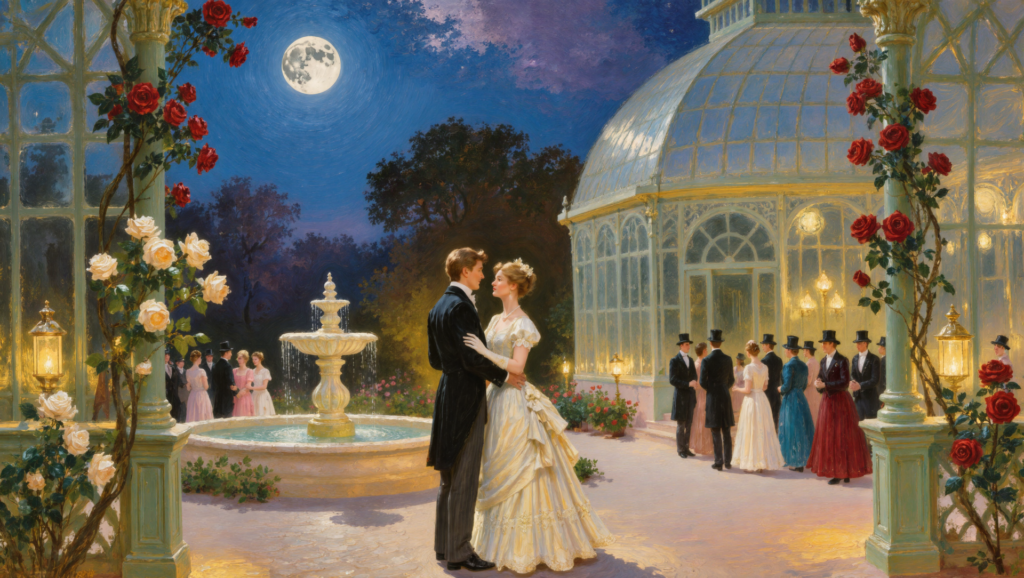
Fake dating is one of the most requested tropes in romance, and one of the strangest when you stop to look at it. Two people agree to lie to everyone around them about being in love, and somewhere inside the lie they stop lying — that is the whole machine, and when it runs well there is almost nothing more satisfying in the genre. When it runs badly it is one of the most eye-rolling things a book can do to you.
The difference is mechanical. Fake dating is a piece of clockwork with specific parts, and the good books assemble them in the right order while the broken ones leave pieces out. So here is the trope taken apart: what powers it, the load-bearing beats every good version hits, the places it snaps, and three books that build it correctly.
What Makes It Work
It manufactures intimacy on a schedule. Two people who would never choose closeness are forced into it and, better still, handed permission to perform it — the hand at the small of the back, the pet name, the kiss for the watching crowd. Real attraction gets to grow disguised as acting, which lets it develop long before either party would have allowed it in the open. Every touch can be waved off afterward as part of the role, which is exactly what makes each one safe to attempt and impossible to forget. The ruse is a machine for closeness between people who would otherwise keep their distance.
It runs on one question: is this still fake? Every performed gesture carries a live ambiguity, for the characters and for the reader both. Was that touch for the audience, or was it real? Did that look mean anything? The engine of the entire trope is the blur between the role and the true thing, and the best fake-dating books stretch that ambiguity out as long as they can — because the moment it resolves, the tension is spent.
The lie is a shield that becomes a trap. Because none of it is meant to be real, the characters can risk a vulnerability they would never risk otherwise. They can lean in, confess a half-truth, let themselves feel it, all under the cover of pretending it does not count. Then the shield turns on them: they have fallen for real, and admitting it means admitting the lie stopped being a lie somewhere along the way, and neither of them knows quite when. The thing they were hiding behind is the thing they are now trapped inside, and there is no clean way out that does not involve the truth.
The Beats, Taken Apart
Almost every good fake-dating story moves through the same six beats. Knowing them is the fastest way to see whether a book is built or bluffing.
The Deal. Why they agree, and it has to be a reason strong enough that faking is the least-bad option in front of them — a wedding with an ex in attendance, a frozen visa, a jealous former partner, a public-image fire. A flimsy reason makes the whole premise wobble.
The Rules. They set terms, always phrased as a promise the book means to break: no real feelings, strictly business, a hard end date. The reader hears these for what they are, which is a countdown.
The Performance. It begins with the first public outing and the first kiss for show, the moment the ambiguity switches on. From here, every gesture has to be read twice.
The Blur. These are the private beats where the act keeps running with no audience left to fool — the tenderness nobody needed to see. This is the heart of the trope, and a book that skips it has no engine.
The Crack. Real feeling breaks through and cannot be explained away as acting, usually witnessed by the other person, usually denied on the spot.
The Collapse. The ruse becomes impossible to sustain, generally through an exposure or the quiet devastation of “it was never fake for me.” The lie ends, and the truth is forced into the open.
Where It Breaks
The reason to fake it is flimsy. This is the most common collapse. If a marginally more sensible choice would remove the need for the ruse, the premise is a house of cards, and a reader can feel the draught from page one. The setup has to be airtight enough that lying is the sane option.
No obstacle survives the mutual crush. By the midpoint both parties want it, everyone around them can see it, and the only thing keeping them apart is that neither will say the one sentence. What follows is the dreaded third-act break built on a silence — maddening because the fix is a single sentence long, and both characters are holding it in their mouths.
The lie costs nothing. Good fake dating makes the deception matter — someone is hurt by it, and the two liars have to reckon with having lied to people who trusted them. When the ruse is consequence-free, the stakes were never real either, and the ending feels unearned.
The performance never blurs. If the fake gestures never stop reading as fake, right up until a hard switch to real, the engine never turns over at all. The entire pleasure of the trope lives in the ambiguity, in not being sure which gestures are performance and which have quietly become true, and a book that keeps the two states in separate boxes has thrown that pleasure away.
Done Right
To All the Boys I’ve Loved Before by Jenny Han
The purest illustration of the Deal and the Rules on this list, and the reason a generation associates the trope with a literal written contract. Lara Jean’s secret love letters get mailed out by mistake; to dodge the fallout, she and popular Peter Kavinsky agree to fake a relationship — he to make his ex jealous, she to bury an inconvenient crush — and they draw up an actual contract of rules to govern it. The contract is the joke and the time bomb at once — a written list of rules so specific it can only be broken clause by clause, which is precisely what happens. Watching two teenagers pretend their way into something real is the trope at its most charming, and its most disarming.
The Love Hypothesis by Ali Hazelwood
The modern flagship, and a clinic in the Rules and the Blur. Olive, a Stanford biology PhD, panics and kisses the first man she sees to convince her best friend she has moved on; the man turns out to be Adam Carlsen, the department’s most feared professor, who agrees to fake-date her because the arrangement suits his own situation. They negotiate strict terms — campus only, an end date — and then every fake conference dinner and pretend hand-hold erodes those terms a little further, until the lie is standing on nothing. It is the erosion, beat by beat, done right.
The Spanish Love Deception by Elena Armas
The maximalist Performance, and the book that leans hardest into every garnish the trope offers. Catalina needs a date to her sister’s wedding in Spain, having invented an American boyfriend for a family that will check; her insufferable colleague Aaron Blackford volunteers, and the two of them fly across an ocean to perform a whole relationship in front of her loud, watchful family. Meeting the parents, the single shared room, the constant public act — it stacks every high-pressure performance beat the trope has, which is why it took over BookTok. It divides readers for the same reason: it commits so hard to the bit that there is no ironic distance left to hide in.
The Takeaway
The appeal was never the lying. What readers come for is the pressure chamber the lie builds: it forces closeness, licenses a vulnerability the characters would never otherwise permit, and then traps two people inside a feeling they assembled while insisting it wasn’t there. That is why the fake kiss hits harder than a real one would — the reader is sitting inside the same question the characters are, watching them refuse to answer it. When the trope works, every performed gesture carries that charge. When it breaks, the cause is a single missing part: a real reason, a real obstacle, a real cost, or the blur itself. Assemble the four, and the oldest lie in romance still works like new.
For more trope breakdowns like this one, the newsletter is where they land first, one obsession at a time.