Expect a Romance reading experience shaped by Dual Point of View, Marriage in Trouble, and Right Person, Wrong Time, with first POV and moderate complexity. It is best approached for its reading feel and fit rather than for advance knowledge of later-book outcomes.
Romance
Us
Romance
Reader Match
Build your match
Use Discover to compare this book against a reading profile. Riley Locke will not invent a percentage without comparable evidence.
Open DiscoverNo specific content guidance has been added yet.
399 pages
About this book
What it feels like to read.
The desk's expeditions beyond the genre have a roster, and Us is its gentlest and most quietly devastating member: David Nicholls's other great relationship novel, shelved here with the standing warning that he writes his own contracts. Where One Day anatomised a love story across twenty anniversaries, Us performs the harder autopsy — a marriage examined from inside its final season — and the desk recommends it with the specific promise that it is also, line by line, one of the funniest books on any of our lists. Both things are true for the whole distance. That is the Nicholls trick, and nobody else has the patent.
Douglas Petersen, biochemist, planner, a man who loves in spreadsheets and worries in footnotes, is woken in the night by his wife Connie with a sentence. She thinks their marriage has run its course, and she thinks she wants to leave, after the summer, after the grand tour of Europe they have booked as a send-off for their son Albie before university. Douglas, being Douglas, responds to the demolition notice with an itinerary. The tour proceeds. And the novel becomes a double journey the desk found perfectly engineered: across Europe's galleries and railway platforms in the present, where Douglas attempts to win back his wife and reach his art-minded, contemptuous, breakable son with all the wrong instruments; and back through the marriage in interleaved memory, from the improbable first meeting — the cautious scientist and the luminous artist — through every compromise and grief that brought two people from that beginning to this bedroom.
What the desk admires most is the fairness of the accounting. Douglas narrates, and Nicholls performs the delicate feat of letting us love a narrator while watching exactly how he became hard to be married to; Connie is never reduced to her verdict; and Albie, the trip's true objective, is written with an honesty about father-son incomprehension that sent the desk out of the room twice. The ending keeps Nicholls's law. It is true rather than guaranteed, and the desk defends it as the book's final kindness.
Honest notices: the genre's promise is not in force, stated plainly as ever; content guidance for grief and a marriage's end examined closely. The comedy never stops working, which is what makes the rest land.
Who is this for? Long-marriage readers, parents of teenagers who have become strangers, and every planner who ever tried to itinerary their way back into someone's heart. Pack lightly, and let the itinerary fail on schedule. The luggage was always the point.
Book details
The record behind this book.
Edition, publication, classification, and verified story metadata associated with this record.
Book knowledge
Spoiler-safe context before you commit.
Characters
This section is ready for a reader to improve.
Setting & world
contemporary
Tropes & patterns
Right Person, Wrong Time
Marriage in Trouble
Dual Point of View
Road Trip
Relationships
This section is ready for a reader to improve.
Community & circles
Read with people you trust.
Compare reactions, discuss the book, and use private circle activity as social context.
Recommendations
A book to try next.
Recommendations use reviewed Riley Locke book data and reader-maintained connections.
From the public-domain library
A classic to try next.
Recommendations use reviewed Riley Locke book data. Raw ebook text and retailer relationships never affect this ranking.
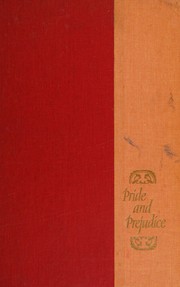

Only manually reviewed, U.S.-rights-gate-passed Gutenberg books that are Search Live can appear here. Riley Locke links to the Gutenberg ebook landing page and does not reproduce the ebook text.