Expect a Romance reading experience shaped by Enemies to Lovers, Rom-Com, and Strangers to Lovers, with fast pace and accessible complexity. It is best approached for its reading feel and fit rather than for advance knowledge of later-book outcomes.
Romance
The Unhoneymooners
Romance
Reader Match
Build your match
Use Discover to compare this book against a reading profile. Riley Locke will not invent a percentage without comparable evidence.
Open DiscoverNo specific content guidance has been added yet.
fast · 1 pages
About this book
What it feels like to read.
Some books earn their place on our shelves through ambition; The Unhoneymooners earns it by being the single most reliable good time in the modern catalogue. The desk prescribes it (for reading slumps, for aeroplanes, for the week your own life has been slightly too much) and it has never failed to take. If Christina Lauren's whole project is comfort executed with craft, this is the proof volume.
The setup is farce built on a foundation of shellfish. At the wedding of Olive's twin sister and Ethan's brother, the entire reception is levelled by a buffet — everyone except Olive, unlucky her whole life and allergic enough to have skipped the seafood, and Ethan, her sworn enemy, too suspicious of discount buffets to touch one. A non-refundable Maui honeymoon is going begging. The newlyweds, green and horizontal, insist. And so two people who cannot share a postcode agree to share a resort, a suite, and (because the trip is riddled with people they must not disillusion) a marriage. The fake newlywed act is the engine, and Lauren runs it at full comic throttle: sunscreen diplomacy, snorkelling incidents, a running war over the good side of the bed.
What carries it beyond the premise is Olive herself. She has organised her identity around being the unlucky twin (the one things happen to, never for) and the book is quietly about what happens when a person's worst-luck narrative stops holding. Watching her recalibrate, suspicious of her own happiness, gives the comedy a warm undertow the desk did not expect on first read and now considers the actual point. Ethan, meanwhile, performs grumpiness the way some men perform golf, and the gap between his reputation and his behaviour closes in exactly the scenes it should.
We will also say this plainly: the third act contains a workplace turn that gives the book a spine many romcoms lack — a moment where Olive must choose between being agreeable and being right, and the novel comes down firmly on one side. It is the difference between a sweet novel and a good one.
Honest notices: the enemies portion of enemies-to-lovers is briskly dispatched — readers wanting a long, vicious thaw should look to our Enemies list's slower burns. The spice is warm rather than scorching. The Maui setting will cause travel-booking impulses; the desk accepts no liability.
Who is this for? Anyone who needs a guaranteed landing. It is the book we hand to readers coming off something heavy, and the one we reread in a single sitting when the weather turns. Funny, generous, and better constructed than a book this breezy has any need to be — which is, of course, the trick.
Book details
The record behind this book.
Edition, publication, classification, and verified story metadata associated with this record.
Book knowledge
Spoiler-safe context before you commit.
Characters
This section is ready for a reader to improve.
Setting & world
This section is ready for a reader to improve.
Tropes & patterns
Strangers to Lovers
Rom Com
Enemies to Lovers
The Proof
Relationships
This section is ready for a reader to improve.
Community & circles
Read with people you trust.
Compare reactions, discuss the book, and use private circle activity as social context.
Recommendations
A book to try next.
Recommendations use reviewed Riley Locke book data and reader-maintained connections.
From the public-domain library
A classic to try next.
Recommendations use reviewed Riley Locke book data. Raw ebook text and retailer relationships never affect this ranking.
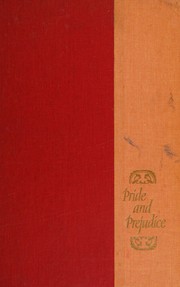

Only manually reviewed, U.S.-rights-gate-passed Gutenberg books that are Search Live can appear here. Riley Locke links to the Gutenberg ebook landing page and does not reproduce the ebook text.