Expect a Romance reading experience shaped by Academic Rivals, Age Gap, and Contemporary Romance, with moderate complexity. It is best approached for its reading feel and fit rather than for advance knowledge of later-book outcomes.
Romance
The Love Hypothesis
Romance
Reader Match
Build your match
Use Discover to compare this book against a reading profile. Riley Locke will not invent a percentage without comparable evidence.
Open DiscoverNo specific content guidance has been added yet.
401 pages
About this book
What it feels like to read.
Every few years a book arrives that resets a subgenre's centre of gravity, and The Love Hypothesis did it for STEM romance so decisively that the field is still writing in its shadow — including, prolifically, its own author. The desk has read the many descendants. We keep coming back to the original, because Ali Hazelwood's debut has the thing imitations cannot manufacture: a premise under real pressure.
Olive Smith is a third-year PhD candidate in biology at Stanford, and the kiss that opens the book is a lie of convenience — staged, on impulse, to convince her best friend she has moved on. The man she kisses, in one of the genre's great cold opens, turns out to be Dr. Adam Carlsen: the department's most feared professor, a man whose lab reports are rumoured to cause weeping, and (for reasons of his own that the book withholds and then pays off handsomely) willing to go along with the charade. What follows is fake dating conducted under fluorescent lights, with grant politics for stakes and Title IX for gravity.
What we admire first is that Hazelwood takes the setting seriously. The science is not wallpaper: the funding anxieties, the conference politics, the particular exhaustion of being a woman in a field that measures her twice — all of it is rendered by someone who has lived it, and it gives the froth a load-bearing frame. Olive's imposter syndrome is written with uncomfortable accuracy, and the book's true romance is between her and her own competence; Adam's role, beautifully, is to be the first person who treats her belief in herself as overdue rather than optional.
And Adam works. The grump-with-a-secret-softness is the most oversubscribed archetype in contemporary romance, but Hazelwood earns him. His reputation is the department's misreading of a man without small talk, and the gap between how he is discussed and how he behaves towards Olive is where the whole book breathes. The pumpkin-spice scene (readers know the one, and new readers will) is the archetype perfected.
Honest notices. There is one plot turn involving professional misconduct that the desk found upsetting, deliberately so; it is handled with anger in the right places. The spice is concentrated late and is, famously, thorough. Readers of the many successor novels should adjust for the fact that this is where the tropes were minted.
Who is this for? Every reader who has ever been the least confident person in a room they earned their way into. The desk shelves it as the modern fake-dating standard — and as a quietly furious book about who gets believed in science, wearing a romcom's excellent clothes.
Book details
The record behind this book.
Edition, publication, classification, and verified story metadata associated with this record.
Book knowledge
Spoiler-safe context before you commit.
Characters
This section is ready for a reader to improve.
Setting & world
This section is ready for a reader to improve.
Tropes & patterns
Age Gap
He Falls First
Academic Rivals
Fake Dating
Contemporary Romance
Relationships
This section is ready for a reader to improve.
Community & circles
Read with people you trust.
Compare reactions, discuss the book, and use private circle activity as social context.
Recommendations
A book to try next.
Recommendations use reviewed Riley Locke book data and reader-maintained connections.
From the public-domain library
A classic to try next.
Recommendations use reviewed Riley Locke book data. Raw ebook text and retailer relationships never affect this ranking.
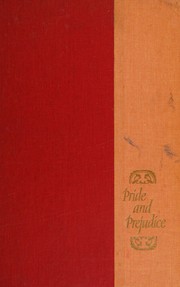

Only manually reviewed, U.S.-rights-gate-passed Gutenberg books that are Search Live can appear here. Riley Locke links to the Gutenberg ebook landing page and does not reproduce the ebook text.