Expect a Romance reading experience shaped by Dual Point of View, Grief and Recovery, and Neurodivergent Leads. It is best approached for its reading feel and fit rather than for advance knowledge of later-book outcomes.
Romance
The Heart Principle
Romance
Reader Match
Build your match
Use Discover to compare this book against a reading profile. Riley Locke will not invent a percentage without comparable evidence.
Open DiscoverNo specific content guidance has been added yet.
353 pages
About this book
What it feels like to read.
Anna Sun lifts the violin and cannot get to the end of the piece. Not nerves, not injury, not any of the things a musician has language for. She has played it correctly a thousand times, and something in her has stopped agreeing to do it again.
Helen Hoang has now written three books on one method, and this is the one where the method turns back on the author. The Kiss Quotient and The Bride Test each put a neurodivergent lead into a romance and let the romance do the accommodating. Here the accommodating is what has to stop.
What broke Anna is worth being precise about, because the novel is. A recording of her playing went out and did well, and the doing well is the injury. Praise arrived attached to one specific interpretation, and now every attempt has to match a version of herself that other people liked. She is not blocked. She is auditioning for her own past performance and losing.
The contract here is unusual for the shelf. The reader is promised a romance and gets one, and the romance is not where the pressure sits. Anna's crisis is her family and her own nervous system, and the man is the steadiest thing in the frame rather than the disruption in it. That inverts the load-bearing structure, and some of the weight lands where a romance reader is not braced for it.
Quan Diep has been standing in the wings of two previous books and gets his volume here. He arrives with a body that has been operated on and a self-image that has not caught up, and the fear he carries about what he can and cannot be for someone is written with the same directness Hoang gives Anna. He is not a reward. A person with his own unfinished business who happens to be good at holding still.
Masking is the real subject and it is written from inside. Anna does not know she is performing until the performance stops working, and the reader who has done it herself will recognise the accounting behind every ordinary evening. The people-pleasing reads as kindness right up until the ledger becomes visible, and that is the point where the novel stops being about a violinist with a block.
Caregiving arrives and the register changes. A daughter in a hospital room taking the shift that keeps getting handed to her, thanked for it in a way that functions as a lock. Hoang writes the family as loving and the love as a mechanism, which is much harder than writing them cruel. There is no villain here and the pressure is enormous.
The older sister is the sharpest secondary character across the three books. She is competent and exhausted and has been carrying this family since before Anna noticed there was anything to carry, and her resentment is earned rather than granted. Two people can both be right and still be the reason the other one cannot breathe.
This book stands or falls on whether the reader wants a romance to hold quite this much. Not on the prose, which is Hoang's strongest. The question is whether a genre built to deliver relief can take a burnout narrative all the way down and still pay out at the end of it.
Two narrators is where the structure argues with itself. One of them is in a slow collapse and the other is in a recovery, so the chapters pull opposite ways. Quan's material is warm and steadying by design, and each cut to it releases pressure the Anna chapters have just spent twenty pages building. Tension does not accumulate. It resets, and the reader feels that reset as relief, which is the wrong feeling to be having in the middle of this particular book.
There is an author's note and it changes what the novel was. Hoang writes in it about her own diagnosis, and a second pass through the fiction shows it was carrying more than fiction usually carries. That is not why the book works. It is why the book is unguarded in the places most novels flinch.
Sex here is a negotiation and gets written as one. Two people whose bodies are not cooperating, working out what is possible instead of performing what is expected, checking in without the checking in reading as instruction. The scenes are frank and they carry plot, which is rarer than the genre's reputation suggests.
Anna keeps saying yes. The book is a full accounting of what that costs.
Book details
The record behind this book.
Edition, publication, classification, and verified story metadata associated with this record.
Book knowledge
Spoiler-safe context before you commit.
Characters
This section is ready for a reader to improve.
Setting & world
contemporary
Tropes & patterns
Neurodivergent Leads
Grief and Recovery
Dual Point of View
Relationships
This section is ready for a reader to improve.
Community & circles
Read with people you trust.
Compare reactions, discuss the book, and use private circle activity as social context.
Recommendations
A book to try next.
Recommendations use reviewed Riley Locke book data and reader-maintained connections.
From the public-domain library
A classic to try next.
Recommendations use reviewed Riley Locke book data. Raw ebook text and retailer relationships never affect this ranking.
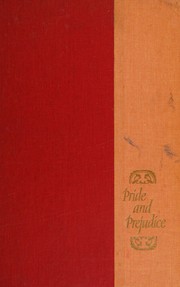

Only manually reviewed, U.S.-rights-gate-passed Gutenberg books that are Search Live can appear here. Riley Locke links to the Gutenberg ebook landing page and does not reproduce the ebook text.