Expect a Romance reading experience shaped by Historical Romance and The Bargain, with fast pace and accessible complexity. It is best approached for its reading feel and fit rather than for advance knowledge of later-book outcomes.
Romance
The Duke and I
Romance
Reader Match
Build your match
Use Discover to compare this book against a reading profile. Riley Locke will not invent a percentage without comparable evidence.
Open DiscoverNo specific content guidance has been added yet.
fast
About this book
What it feels like to read.
The desk owes this book a debt of precision, because more readers now arrive at it backwards (from the streaming series, string quartets still in their ears) than through any other door in our catalogue, and they deserve to know what the source is. The Duke and I (2000) is the first of Julia Quinn's eight Bridgerton novels, the origin of the fake-courtship scheme the adaptation made famous, and a sleeker, funnier, more contained thing than its screen version: one couple, one season, one lie that stops being one.
The bargain remains the genre's best-oiled machinery. Simon Basset, the new Duke of Hastings, has returned to London carrying a vow the book unpacks in its own time (he will not marry, for reasons rooted in a childhood the prologue renders with surprising sting) and finds himself the season's most hunted quarry. Daphne Bridgerton, fourth of eight siblings and constitutionally everyone's friend, has the opposite affliction: gentlemen like her far too much to court her. The scheme writes itself. A staged attachment, his pursuit deterring the mamas, her stock rising on ducal attention, both parties protected — supervised throughout by Lady Whistledown, the anonymous scandal sheet whose commentary gives the book its sparkling frame, and by Daphne's brothers, whose interference supplies half the comedy. Quinn's dialogue is the draw: quick, warm, unbothered by its own anachronisms, Regency as playground rather than museum.
What the desk admires most is Daphne herself — practical, unswoony, the product of a loud and loving family, and one of the genre's earliest heroines to treat marriage as a negotiation she intends to understand rather than a prize she hopes to receive. Simon's wound, and the vow it produced, gives the fake courtship real stakes. This is a book about whether spite sworn against a dead father should be allowed to price a living future.
Honest notices, and one is serious. The book contains a mid-novel consent scene that readers and critics have debated for two decades, with cause — the desk flags it plainly and without detail, and considers the conversation around it worth having rather than avoiding. Beyond that. The third act leans melodramatic by modern standards, and the spice is moderate, frank for its era.
Who is this for? Series viewers ready for the source, and trope historians tracing the fake courtship to a spring. It holds its seat on our canon list on merit, not nostalgia. Readers who finish wanting more of the family (and the family is the franchise's true invention, eight siblings alphabetised like an index) will find each gets a novel; the desk's guidance, contested but firm, is that the third, An Offer from a Gentleman, is the backlist's quiet best.
Book details
The record behind this book.
Edition, publication, classification, and verified story metadata associated with this record.
Book knowledge
Spoiler-safe context before you commit.
Characters
This section is ready for a reader to improve.
Setting & world
This section is ready for a reader to improve.
Tropes & patterns
Historical Romance
The Bargain
Relationships
This section is ready for a reader to improve.
Community & circles
Read with people you trust.
Compare reactions, discuss the book, and use private circle activity as social context.
Recommendations
A book to try next.
Recommendations use reviewed Riley Locke book data and reader-maintained connections.
From the public-domain library
A classic to try next.
Recommendations use reviewed Riley Locke book data. Raw ebook text and retailer relationships never affect this ranking.
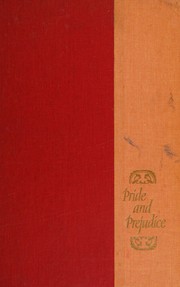

Only manually reviewed, U.S.-rights-gate-passed Gutenberg books that are Search Live can appear here. Riley Locke links to the Gutenberg ebook landing page and does not reproduce the ebook text.