Expect a Romance reading experience shaped by Enemies to Lovers, Epistolary Romance, and Hidden Identity. It is best approached for its reading feel and fit rather than for advance knowledge of later-book outcomes.
Romance
Punk 57
Romance
Reader Match
Build your match
Use Discover to compare this book against a reading profile. Riley Locke will not invent a percentage without comparable evidence.
Open DiscoverNo specific content guidance has been added yet.
Commitment not yet verified
About this book
What it feels like to read.
Penelope Douglas files under handle-with-intent at this desk, and Punk 57 is the volume that best explains her enormous readership: an enemies-to-lovers built on the genre's cruellest structural irony, two penpals who have loved each other on paper for seven years and despise each other on sight without knowing it. The premise alone would carry a lighter book. Douglas, characteristically, is not writing a lighter book, and readers should meet this one informed.
Misha and Ryen were matched as fifth-grade penpals by teachers who assumed their names meant a girl and a boy respectively, kept writing faithfully long after the school assignment died, and built the correspondence into the one place either tells the truth. Three rules held it together: no last names, no photos, no meeting. Then Misha's letters stop without explanation — the book discloses why in its own time, and the desk notes content guidance for family tragedy and its aftermath — and months later he walks into Ryen's high school under a borrowed name, recognises her from a detail in the letters, and discovers the person he has loved longest is, in daylight, a careful, calculating mean girl wearing survival like uniform. He stays. He does not tell her who he is. And the book becomes a double indictment conducted as a romance. He punishes the daylight Ryen for betraying the paper one, while hiding behind a false name himself, and Douglas is unsparing about the hypocrisy running both directions.
What the desk admires is the book's refusal to let either lead off the hook. Ryen's cruelty at school is real and the novel makes her account for it; Misha's deception is real and it costs him properly; and the letters, excerpted throughout, keep the reader supplied with the truer versions both are failing to be. The identity reveal, when it detonates, is staged for maximum damage and lands exactly there.
Honest notices, at eye level: this is new-adult dark-adjacent romance set among eighteen-year-old seniors — heat is explicit, the bullying is depicted rather than gestured at, and content warnings run serious; check them. The punk of the title is an ethos the book interrogates honestly.
Who is this for? Readers who want their enemies premise structural rather than performed, Douglas loyalists, and anyone who was a different person on paper once. Write back. The desk always does, though we now check the name on the envelope twice, on principle, and we recommend the habit. Douglas's wider catalogue runs adjacent temperatures for readers who finish this one and want the next dose.
Book details
The record behind this book.
Edition, publication, classification, and verified story metadata associated with this record.
Book knowledge
Spoiler-safe context before you commit.
Characters
This section is ready for a reader to improve.
Setting & world
high school
contemporary
Tropes & patterns
The Grovel
Hidden Identity
Revenge Romance
Epistolary Romance
Enemies to Lovers
Relationships
enemies to lovers, penpals, hidden identity
Community & circles
Read with people you trust.
Compare reactions, discuss the book, and use private circle activity as social context.
Recommendations
A book to try next.
Recommendations use reviewed Riley Locke book data and reader-maintained connections.
From the public-domain library
A classic to try next.
Recommendations use reviewed Riley Locke book data. Raw ebook text and retailer relationships never affect this ranking.
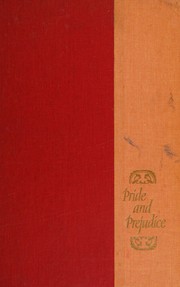

Only manually reviewed, U.S.-rights-gate-passed Gutenberg books that are Search Live can appear here. Riley Locke links to the Gutenberg ebook landing page and does not reproduce the ebook text.