Expect a Romance reading experience shaped by Marriage in Trouble, Right Person, Wrong Time, and Unrequited Love, with moderate complexity. It is best approached for its reading feel and fit rather than for advance knowledge of later-book outcomes.
Romance
One Day
Romance
Reader Match
Build your match
Use Discover to compare this book against a reading profile. Riley Locke will not invent a percentage without comparable evidence.
Open DiscoverNo specific content guidance has been added yet.
300 pages
About this book
What it feels like to read.
The second of the desk's two expeditions outside the genre, and the one we hand over with the firmest grip on the reader's shoulder. One Day is a love story, not a genre romance — the desk's distinction, and nowhere in the catalogue does it carry more weight than here. David Nicholls's novel keeps a different contract than our shelves usually enforce, and we will say nothing further about its terms except that they are honoured, devastatingly, and that going in unbriefed is both the best and the costliest way to read it. Choose with self-knowledge.
The structure is the famous part, and it deserves the fame. Emma Morley and Dexter Mayhew spend the night after their 1988 university graduation together in Edinburgh, nearly and chastely and memorably, and the novel then visits them on that same date, the fifteenth of July, every year for two decades. One day per year: some years they are close, some estranged, some in other relationships, some merely thinking of each other across a city. The device sounds like a gimmick and operates like a heart. Whole relationships rise and fall between chapters; the reader assembles the missing months from wreckage and implication, and the anniversary structure quietly teaches the book's whole thesis, which is that a life is glimpsed, not supervised.
Emma and Dexter themselves are a study in delayed deserving. She is bright, principled, and stuck — years of terrible jobs and worse boyfriends while her promise gathers dust; he is charming, feckless, and briefly famous, a man the nineties reward for exactly the qualities that are ruining him. The novel's long game is watching each become someone capable of the other, at the pace real people actually change, which is to say slowly and sideways and almost too late. Nicholls is very funny, line to line, in the British register where jokes are how feeling travels, and the comedy is what makes the book's heavier cargo deliverable.
Honest notices: content notes for alcohol dependency and grief. The middle years frustrate by design — Dexter's worst stretch is meant to cost the reader patience. Screen adaptations exist in two generations; the desk backs the recent series.
Who is this for? Second-chance readers ready to leave the safety rail behind, and anyone who has measured a life in anniversaries. St Swithin's Day, if thou dost rain. Look it up afterwards, not before. Published in 2009, the novel became a word-of-mouth phenomenon whose orange cover colonised an entire summer of public transport, and it has stayed continuously in print since — a longevity the desk attributes to the simplest cause available. People keep handing it to people. With conditions attached, we now do the same.
Book details
The record behind this book.
Edition, publication, classification, and verified story metadata associated with this record.
Book knowledge
Spoiler-safe context before you commit.
Characters
This section is ready for a reader to improve.
Setting & world
contemporary
Tropes & patterns
Marriage in Trouble
Right Person, Wrong Time
Unrequited Love
Relationships
This section is ready for a reader to improve.
Community & circles
Read with people you trust.
Compare reactions, discuss the book, and use private circle activity as social context.
Recommendations
A book to try next.
Recommendations use reviewed Riley Locke book data and reader-maintained connections.
From the public-domain library
A classic to try next.
Recommendations use reviewed Riley Locke book data. Raw ebook text and retailer relationships never affect this ranking.
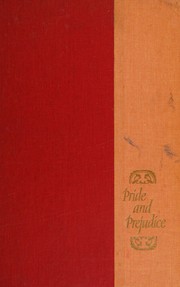

Only manually reviewed, U.S.-rights-gate-passed Gutenberg books that are Search Live can appear here. Riley Locke links to the Gutenberg ebook landing page and does not reproduce the ebook text.