The reading feel has not been added yet.
Romance
Once Upon a Broken Heart
Romance
Reader Match
Build your match
Use Discover to compare this book against a reading profile. Riley Locke will not invent a percentage without comparable evidence.
Open DiscoverNo specific content guidance has been added yet.
432 pages
About this book
What it feels like to read.
Some books are engineered and some are conjured, and Stephanie Garber works the second method. Once Upon a Broken Heart reads as if a fairy tale acquired self-awareness and decided to monetise. It is gilded, sinister, romantic, and constructed almost entirely of bad decisions made beautifully, and the desk recommends it with the specific warning that its love interest is not safe, which is the point.
Evangeline Fox is a believer. Raised on her mother's tales in a curiosity shop, she holds the conviction, dangerous in any genre, that stories owe her a happy ending. So when the boy she loves announces his marriage to her stepsister, Evangeline does what heroines are firmly advised against: she visits the church of the Fates and prays to the Prince of Hearts, an immortal whose kisses kill and whose help has never come cheap. Jacks answers, and the wedding stops. The price is three kisses, to be collected at times of his choosing, which any reader of fairy tales will recognise as the sound of a much larger door opening.
What the desk admires is the control. Garber writes in a sugared, storybook register that could rot into whimsy, and instead keeps a knife in it: every enchantment has a clause, every gift a hook, and Jacks himself is the finest modern rendition of the beautiful catastrophe, charming in the exact register of someone who has had centuries to practise and no reason to mean it. The book's real subject is Evangeline's faith, tested rather than mocked; she keeps choosing hope in a machine designed to price it, and the machine keeps being surprised. Readers of Garber's Caraval will find connective tissue and one significant returning figure; newcomers can begin here without loss, which the desk verified by assigning both routes.
Honest notices: this is a trilogy opener that ends mid-sentence, spiritually speaking — have the second book nearby. The romance is a long game with a body count of certainties rather than characters. Heat is a kiss, charged accordingly; the register sits young-adult-and-upward.
Who is this for? Readers who want their romance folkloric, anyone who annotates for aesthetic, and every reader who has ever trusted a beautiful liar on purpose. Apples feature; be advised. For planners, the trilogy is complete — The Ballad of Never After and A Curse for True Love close the arc — so the mid-sentence ending above is a bridge, not an abandonment, and readers can run all three in a single possessed weekend, which is how the desk's own copy acquired its annotations and its slightly chewed corner.
Book details
The record behind this book.
Edition, publication, classification, and verified story metadata associated with this record.
Book knowledge
Spoiler-safe context before you commit.
Characters
This section is ready for a reader to improve.
Setting & world
a curiosity shop, the church of the fates
secondary-world
Tropes & patterns
Immortal and Mortal
Curse or Prophecy
The Bargain
Retelling
Relationships
bargain with an immortal
three kisses owed
Community & circles
Read with people you trust.
Compare reactions, discuss the book, and use private circle activity as social context.
Recommendations
A book to try next.
Recommendations use reviewed Riley Locke book data and reader-maintained connections.
From the public-domain library
A classic to try next.
Recommendations use reviewed Riley Locke book data. Raw ebook text and retailer relationships never affect this ranking.
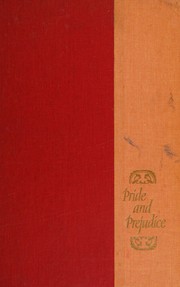

Only manually reviewed, U.S.-rights-gate-passed Gutenberg books that are Search Live can appear here. Riley Locke links to the Gutenberg ebook landing page and does not reproduce the ebook text.