Expect a Romance reading experience shaped by Arranged Marriage, Marriage of Convenience, and Slow Burn, with slow pace and moderate complexity. It is best approached for its reading feel and fit rather than for advance knowledge of later-book outcomes.
Romance
Marriage for One
Romance
Reader Match
Build your match
Use Discover to compare this book against a reading profile. Riley Locke will not invent a percentage without comparable evidence.
Open DiscoverNo specific content guidance has been added yet.
slow
About this book
What it feels like to read.
Ella Maise's Marriage for One is the desk's pick for the trope's slowest thaw, a marriage-of-convenience romance in which the convenience is real, the marriage is glacial, and the reader spends three hundred pages being paid in degrees. Readers raised on banter-forward versions should recalibrate at the door: this is the quiet, aching, single-candle version of the form, narrated by a heroine whose optimism is a discipline rather than a temperament, and the desk found its eventual warmth all the more valuable for the winter it crosses first.
Rose Coleson has one dream with a signed lease, a coffee shop of her own, tied up in property her late uncle's estate controls, and the estate's lawyer arrives with the strangest possible instrument of rescue. Jack Hawthorne, attorney, handsome the way a courthouse is, and warm the way one is not, proposes marriage, flatly, as a mutually beneficial arrangement that will secure her shop and serve purposes of his own that he declines to itemise. Rose, out of options and unwilling to lose the dream, signs on. The trope follows with its usual comforts deliberately withheld: no banter, no forced proximity fireworks, just a wife building a business in daylight and a husband who behaves like a courteous hotel, while the reader collects the small anomalies — the rearranged schedules, the surveillance of her comfort, the fury misdirected at anyone who slights her — that suggest Jack's ledger contains entries Rose has never seen.
The desk will be plain about the architecture. This book has a reveal, it recontextualises the entire marriage, and it is the reason the slow first half exists. We will not gesture at its contents. We will say the book plays fair, the clues are on the table in open sight, and the desk read the final chapters twice, once for the feeling and once for the engineering.
Honest notices: the pacing is the design and also the toll — readers needing early voltage should choose a louder wire; the heroine's doormat-adjacent patience frustrates by design before it pays. Content notes for grief and family cruelty. Heat arrives late and matters.
Who is this for? Slow-burn purists, readers who like their heroes decoded rather than declared, and anyone who has ever built a dream on a technicality. Order the coffee. Stay for the audit, and then do what every reader of this book does, which is turn back to the first chapters and watch the whole marriage again with the lights on. It is a different book the second time. That is the design, and the desk salutes it.
Book details
The record behind this book.
Edition, publication, classification, and verified story metadata associated with this record.
Book knowledge
Spoiler-safe context before you commit.
Characters
This section is ready for a reader to improve.
Setting & world
This section is ready for a reader to improve.
Tropes & patterns
Slow Burn
Arranged Marriage
Marriage of Convenience
The Slow Reveal
Relationships
This section is ready for a reader to improve.
Community & circles
Read with people you trust.
Compare reactions, discuss the book, and use private circle activity as social context.
Recommendations
A book to try next.
Recommendations use reviewed Riley Locke book data and reader-maintained connections.
From the public-domain library
A classic to try next.
Recommendations use reviewed Riley Locke book data. Raw ebook text and retailer relationships never affect this ranking.

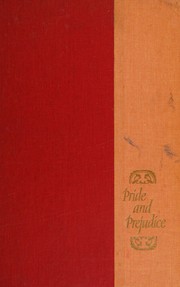
Only manually reviewed, U.S.-rights-gate-passed Gutenberg books that are Search Live can appear here. Riley Locke links to the Gutenberg ebook landing page and does not reproduce the ebook text.