Expect a Romance reading experience shaped by Enemies to Lovers, Forced Proximity, and Slow Burn. It is best approached for its reading feel and fit rather than for advance knowledge of later-book outcomes.
Romance
Love on the Brain
Romance
Reader Match
Build your match
Use Discover to compare this book against a reading profile. Riley Locke will not invent a percentage without comparable evidence.
Open DiscoverNo specific content guidance has been added yet.
442 pages
About this book
What it feels like to read.
Bee asks herself what Marie Curie would do, and the answer is take the job. It is a good code. It is also a way of not having to say out loud what Bee wants.
Ali Hazelwood writes to a specification, and the specification is the product. A small woman with a specialism, an enormous man who appears to loathe her, an institution that punishes her for occupying space in it, and a hostility the reader already knows is standing in for something else. No reader of this book is uncertain about the shape, and pretending otherwise would be a poor way to read it.
The trade is legible and worth naming. The reader gets competence in action, a slow thaw, and a hero whose devotion is total from the moment it surfaces. She pays for it with a conflict that would collapse if either party said one plain sentence out loud.
Bee's professional humiliations are the strongest writing here because they are specific. Equipment goes missing. Meetings move without her being told. No grant, no allies, no standing, and underneath all of it the exhaustion of deciding each time whether this is the one worth making an issue of.
Levi Ward is a construction rather than a character, and Hazelwood knows it. He exists in order to be misread, so he is granted almost no interiority until the misreading has run its course. That is defensible for this structure and it costs him three hundred pages of being a wall with a jaw.
A second channel runs beneath the main one. Bee confides in an anonymous colleague she has not met, in messages where she can say the things the lab will not let her say, and the thread is doing more than it looks like it is doing. It pays late. Where it pays is the one thing in the book a reader should be allowed to reach on her own.
The NASA frame is decoration and the book is fairly honest about that. Nothing in the neuroengineering needs to be neuroengineering, and the project could be almost any high-stakes collaboration without a sentence changing. What the setting buys is a closed room with a deadline and a hierarchy, which is all the plot asks of it.
This book turns on a single tolerance. Either the reader enjoys being ahead of the narrator, watching her build a wrong model of a man and then act on it with total conviction, or she finds the whole thing airless, and the workplace material is not built to carry a novel by itself.
Arithmetic is the failure mode. A conflict made of one unasked question has a fixed quantity of fuel, and every scene that brings the two of them closer burns some without replacing any. The middle therefore has to import pressure from outside the relationship, and the imports are thinner than the misreading they are covering for. Each one arrives, performs its function, and leaves without having altered either person.
Bee's narration is funny in a way that does structural work. The jokes are defensive and they cluster exactly where she is most exposed, and Hazelwood is disciplined about letting the reader see that mechanism without having Bee explain it. That is the strongest thing here and it is not what the cover is selling.
Set beside The Love Hypothesis, this is the more assured book and the less alive one. The first had the energy of something being worked out in the writing. This one knows precisely what it is doing, and the knowing costs it the wobble that made the earlier one feel unrepeatable.
Marie Curie is a fine code. It answers a question Bee was not actually asking.
Book details
The record behind this book.
Edition, publication, classification, and verified story metadata associated with this record.
Book knowledge
Spoiler-safe context before you commit.
Characters
This section is ready for a reader to improve.
Setting & world
contemporary
Tropes & patterns
Enemies to Lovers
Slow Burn
Forced Proximity
Relationships
m/f
Community & circles
Read with people you trust.
Compare reactions, discuss the book, and use private circle activity as social context.
Recommendations
A book to try next.
Recommendations use reviewed Riley Locke book data and reader-maintained connections.
From the public-domain library
A classic to try next.
Recommendations use reviewed Riley Locke book data. Raw ebook text and retailer relationships never affect this ranking.
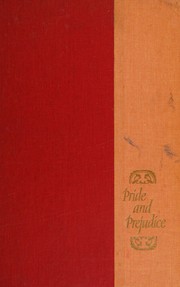

Only manually reviewed, U.S.-rights-gate-passed Gutenberg books that are Search Live can appear here. Riley Locke links to the Gutenberg ebook landing page and does not reproduce the ebook text.