Expect a Romance reading experience shaped by Friends to Lovers, Second Chance, and The Confession, with moderate complexity. It is best approached for its reading feel and fit rather than for advance knowledge of later-book outcomes.
Romance
Love and Other Words
Romance
Reader Match
Build your match
Use Discover to compare this book against a reading profile. Riley Locke will not invent a percentage without comparable evidence.
Open DiscoverNo specific content guidance has been added yet.
480 pages
About this book
What it feels like to read.
One shelf at this desk holds the books we recommend with a hand briefly on the reader's arm, and Love and Other Words sits at its centre. Christina Lauren's first women's-fiction-leaning standalone is the duo's most beloved book by informal vote and their most personal by texture — a second-chance romance built around a childhood library, a closet with a dictionary in it, and the specific vocabulary two people invent when they grow up inside each other's weather. It is also a novel with a sealed room, and the desk will be conducting this introduction entirely from the hallway.
The timelines alternate. In Then, Macy Sorensen, eleven and motherless, arrives at her father's new weekend house in Healdsburg and finds the boy next door, Elliot Petropoulos, already living in books. What follows across the Then chapters is one of the genre's tenderest slow constructions, a friendship assembled from shared paperbacks and a closet wall of favourite words, ripening with excruciating patience towards first love. In Now, Macy is a paediatrics resident, efficient and sealed, engaged to a sensible man, and eleven years into not speaking to Elliot, when a coffee-shop collision puts him back in her morning. The book's whole current runs through the gap between the timelines. Something happened one New Year's. Everyone in the Now knows what it was except the reader, and the reveal is paced like the confession it is.
What we admire most is the vocabulary conceit, which could have been twee and is instead structural: words were how Macy and Elliot loved each other before either had permission for the other kind, so the book's late passages, when language finally gets used at full strength, land with the weight of a promise kept. Elliot may be the gentlest of Christina Lauren's heroes, a man whose patience is the plot.
Honest notices: the sealed room, once opened, involves grief and a violation of trust that some readers find under-litigated by the ending; the desk understands both verdicts. Content notes for parental loss. Heat is present, restrained, meaningful.
Who is this for? Second-chance believers, anyone who ever loved someone through a wall of books, and readers who keep a private word for a private person. Bring your own dictionary. You will want to add to it. Within the Christina Lauren catalogue this is the emotional lane — the duo alternates between comedies and books like this one, and the desk's guidance for newcomers is simple: The Unhoneymooners is their laugh, this is their ache, and both are proof of range. Readers routinely report finishing it in one sitting. The desk's copy shows evidence of the same failure of discipline.
Book details
The record behind this book.
Edition, publication, classification, and verified story metadata associated with this record.
Book knowledge
Spoiler-safe context before you commit.
Characters
This section is ready for a reader to improve.
Setting & world
contemporary
Tropes & patterns
Friends to Lovers
Second Chance
The Confession
Relationships
This section is ready for a reader to improve.
Community & circles
Read with people you trust.
Compare reactions, discuss the book, and use private circle activity as social context.
Recommendations
A book to try next.
Recommendations use reviewed Riley Locke book data and reader-maintained connections.
From the public-domain library
A classic to try next.
Recommendations use reviewed Riley Locke book data. Raw ebook text and retailer relationships never affect this ranking.
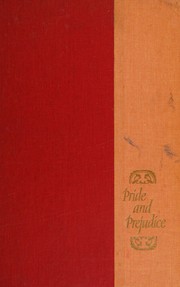

Only manually reviewed, U.S.-rights-gate-passed Gutenberg books that are Search Live can appear here. Riley Locke links to the Gutenberg ebook landing page and does not reproduce the ebook text.