Expect a Romance reading experience shaped by Dual Point of View, Happy for Now, and Second Chance, with alternating POV. It is best approached for its reading feel and fit rather than for advance knowledge of later-book outcomes.
Romance
It Starts with Us
Romance
Reader Match
Build your match
Use Discover to compare this book against a reading profile. Riley Locke will not invent a percentage without comparable evidence.
Open DiscoverNo specific content guidance has been added yet.
352 pages
About this book
What it feels like to read.
Protocol first, and this one matters more than most: this introduction assumes you have finished It Ends with Us, whose ending is both that book's whole argument and this book's opening position. If the first volume is still ahead of you, go and have that experience unaccompanied. We will keep the lights on here.
For everyone else, the sequel begins with the question the first book earned the right to ask — what does a life look like after the brave decision, once the applause dies down and the paperwork starts? Lily Bloom is divorced, co-parenting a toddler with a man she must see every week and can never fully trust, and running her flower shop through the specific exhaustion of a woman whose hardest choice is behind her and whose hardest years are not. When Atlas Corrigan walks back into her orbit on the first morning of the book, the reunion the fandom demanded arrives with Hoover's characteristic honesty about its price tag. Dating again, for a survivor co-parenting with the man she survived, is not a rom-com premise. It is a security question.
The desk wants to say plainly what this book is and is not. It is not the first book, and it does not attempt to be — the ordeal is over, and Hoover has said directly that she wrote this as recovery, a gentler volume for readers and for Lily. What it is: a book about aftermath logistics, the unglamorous machinery of boundaries, custody hand-offs, new love conducted under old surveillance, and a heroine learning that safety is not a destination but a practice. Atlas, patient and sturdy, gets his own point of view and his own storm to manage — a younger brother in trouble, a restaurant, a past that finally gets its full accounting — and his chapters give the book its warmth while Lily's give it its spine.
Honest notices: readers wanting the first book's intensity will find something quieter by design, and the antagonist's continued presence means continued content warnings for coercive behaviour and its management. The desk considers the calmer register the point, not a flaw.
Who is this for? Everyone who closed the first book needing to know Lily lands softly. She does, eventually, at a realistic speed. The pair should be read in order, and the desk suggests reading this one when you need proof that the hard decision holds. It holds. That is the entire, sufficient plot, and after the first book's storm, sufficiency reads as luxury. The pair now sits complete on the shelf, and the desk shelves them together, always, in order.
Book details
The record behind this book.
Edition, publication, classification, and verified story metadata associated with this record.
Book knowledge
Spoiler-safe context before you commit.
Characters
This section is ready for a reader to improve.
Setting & world
contemporary
Tropes & patterns
Second Chance
Dual Point of View
Happy for Now
Relationships
This section is ready for a reader to improve.
Community & circles
Read with people you trust.
Compare reactions, discuss the book, and use private circle activity as social context.
Recommendations
A book to try next.
Recommendations use reviewed Riley Locke book data and reader-maintained connections.
From the public-domain library
A classic to try next.
Recommendations use reviewed Riley Locke book data. Raw ebook text and retailer relationships never affect this ranking.
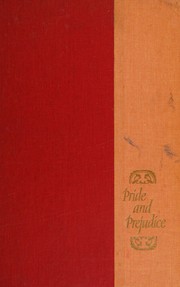

Only manually reviewed, U.S.-rights-gate-passed Gutenberg books that are Search Live can appear here. Riley Locke links to the Gutenberg ebook landing page and does not reproduce the ebook text.