Expect a Romance reading experience shaped by Bookish Romance, Meet Cute, and Third Act Breakup. It is best approached for its reading feel and fit rather than for advance knowledge of later-book outcomes.
Romance
Book Lovers
Romance
Reader Match
Build your match
Use Discover to compare this book against a reading profile. Riley Locke will not invent a percentage without comparable evidence.
Open DiscoverNo specific content guidance has been added yet.
400 pages
About this book
What it feels like to read.
This desk keeps a private test for a romance author: give them the character every other book treats as the obstacle, and see what they do. Emily Henry passed it so thoroughly with Book Lovers that we consider this her sharpest novel — the one we hand to readers who want proof that the genre can interrogate its own furniture and still deliver everything the furniture was for.
Nora Stephens is the woman the small-town romance exists to defeat: the ambitious city girlfriend in heels, the literary agent with a phone grafted to her hand, the one who gets left when the hero discovers homemade jam and a slower life. Henry's masterstroke is to hand this perennial villain the narration and reveal what the trope always refused to ask — who she is when nobody needs her to be the cautionary tale. The answer involves a sister she would dismantle the world for, a workload that is half armour, and a grief the book unpacks with a patience we did not expect to move us. It did.
Opposite her: Charlie Lastra, a brooding editor with no patience for sentiment, who has already rejected her favourite author's manuscript and, seemingly, her entire personality. When Nora's sister drags her to Sunshine Falls, North Carolina, for a small-town summer scripted straight from the novels Nora sells, Charlie is inexplicably there — and the town keeps trying to Hallmark two people who are constitutionally resistant to it. The comedy of the premise is that both of them know the tropes, name the tropes, and fall anyway; the depth of it is that Henry never lets the self-awareness curdle into smugness. The banter here is the best she has written — fast, literate, flirtatious in the way of two people relieved to be playing, at last, at their own weight class.
What we admire most, though, is the sister story. Underneath the romance runs a quieter book about what caretaking costs, about the roles siblings assign each other in childhood and never revoke, and the final chapters land their hardest blows there, not in the love plot. Bring tissues for reasons you will not expect.
Honest notices. Readers who come for small-town cosiness should understand the book is fond of the genre while cross-examining it. The spice is present and confidently handled. The pace idles briefly mid-book, as Henry's novels tend to, and recovers in full.
Who is this for? Anyone who has ever been the practical one. Anyone who suspects they would be the villain in a Hallmark film and has made peace with it. And every romance reader who wants to watch the genre's smartest working novelist take the machinery apart, name every part, and reassemble it running better. The desk's copy is annotated. Heavily.
Book details
The record behind this book.
Edition, publication, classification, and verified story metadata associated with this record.
Book knowledge
Spoiler-safe context before you commit.
Characters
This section is ready for a reader to improve.
Setting & world
sunshine falls, north carolina
new york
contemporary
Tropes & patterns
Meet Cute
Third Act Breakup
Bookish Romance
Relationships
enemies to lovers, small-town summer
Community & circles
Read with people you trust.
Compare reactions, discuss the book, and use private circle activity as social context.
Recommendations
A book to try next.
Recommendations use reviewed Riley Locke book data and reader-maintained connections.
From the public-domain library
A classic to try next.
Recommendations use reviewed Riley Locke book data. Raw ebook text and retailer relationships never affect this ranking.
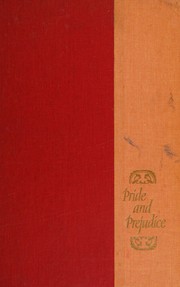

Only manually reviewed, U.S.-rights-gate-passed Gutenberg books that are Search Live can appear here. Riley Locke links to the Gutenberg ebook landing page and does not reproduce the ebook text.