Expect a Romance reading experience shaped by Caretaker Romance, Chronic Illness and Disability, and Grumpy Sunshine. It is best approached for its reading feel and fit rather than for advance knowledge of later-book outcomes.
Romance
Archer’s Voice
Romance
Reader Match
Build your match
Use Discover to compare this book against a reading profile. Riley Locke will not invent a percentage without comparable evidence.
Open DiscoverNo specific content guidance has been added yet.
Commitment not yet verified
About this book
What it feels like to read.
Some love stories are loud and this one has perhaps forty spoken words in it, most of them Bree's. Archer's Voice was self-published in 2014, found its readership the slow way, hand to hand, and has outlasted a decade of louder books to become a permanent citizen of every recommended list the genre keeps. The desk long assumed the reputation was nostalgia. The desk has since read it twice and apologises for the assumption.
Bree Prescott arrives in Pelion, Maine, running from a trauma the book discloses gently and in its own time, looking for quiet and a waitressing job and no particular future. She finds all three, and she also finds the town's resident ghost story — a young man who lives alone behind a fence on inherited land, who speaks to no one because he cannot, his voice taken by the same long-ago catastrophe that took nearly everything else, and around whom the town has built a comfortable wall of pity and silence. Archer Hale communicates in sign language nobody local has bothered to learn. Bree, for reasons that are the book's first tenderness, learns.
What follows is a romance conducted at the speed of trust, and Mia Sheridan writes it with a patience the desk found almost physically calming. Archer is not a project; the book is scrupulous about this. He is a whole person, funny and observant and self-taught in everything, whose isolation was constructed for him by other people's choices, and the love story doubles as the slow demolition of that construction. The scenes in which he and Bree assemble a shared language, hands first, words later, are the desk's exhibit for how heat and innocence can occupy the same page without embarrassing each other. The town's old catastrophe, and the inheritance politics still radiating from it, we leave exactly where the book keeps them: behind the fence, until it is time.
Honest notices: the small-town machinery includes a jealous-rival thread the desk found the book's weakest wiring, and the final-act separation beat is genre-standard. Content notes for past violence and anxiety. Heat is earnest and fully present.
Who is this for? Readers who want their slow burns vow-quiet, anyone who has ever been the town's story instead of its neighbour, and every reader building a founders' shelf of modern romance. It holds. A decade of hands passing it along was right. Sheridan returned to Pelion years later with a companion novel, and readers wanting more of the town will find it — but this book needs no continuation. It closes like what it is: a vow, witnessed, complete.
Book details
The record behind this book.
Edition, publication, classification, and verified story metadata associated with this record.
Book knowledge
Spoiler-safe context before you commit.
Characters
This section is ready for a reader to improve.
Setting & world
pelion, maine
small town
Tropes & patterns
Grumpy Sunshine
Instalove
Chronic Illness and Disability
Caretaker Romance
Touch Starved
Slow Burn
Relationships
slow burn
Community & circles
Read with people you trust.
Compare reactions, discuss the book, and use private circle activity as social context.
Recommendations
A book to try next.
Recommendations use reviewed Riley Locke book data and reader-maintained connections.
From the public-domain library
A classic to try next.
Recommendations use reviewed Riley Locke book data. Raw ebook text and retailer relationships never affect this ranking.
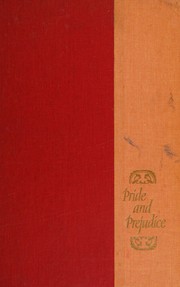

Only manually reviewed, U.S.-rights-gate-passed Gutenberg books that are Search Live can appear here. Riley Locke links to the Gutenberg ebook landing page and does not reproduce the ebook text.