Expect a Romance reading experience shaped by Arranged Marriage, Found Family, and Tragic Romance. It is best approached for its reading feel and fit rather than for advance knowledge of later-book outcomes.
Romance
A Thousand Splendid Suns
Romance
Reader Match
Build your match
Use Discover to compare this book against a reading profile. Riley Locke will not invent a percentage without comparable evidence.
Open DiscoverNo specific content guidance has been added yet.
420 pages
About this book
What it feels like to read.
Certain books enter the building with their terms carried ahead of them on a separate tray, and A Thousand Splendid Suns is one of them, so the desk sets the tray down first. This is not a romance. It is a tragedy with love inside it, which is a different architecture entirely, and the genre's promise is nowhere in force. Khaled Hosseini's second novel is one of the most widely wept-over books of its century, and the desk keeps it shelved, recommends it with both hands, and asks every reader to choose their season for it deliberately. The weeping is not a marketing flourish. It is the reading experience, and it is earned line by line.
The novel is the story of two Afghan women whose lives are forced into the same house and then into each other's keeping. Mariam is born outside legitimacy on the edge of Herat, raised on her mother's bitterness and her father's beautiful, worthless visits, and married off at fifteen to Rasheed, a Kabul shoemaker three decades her senior, in whose home the doors close one by one. Laila is born a generation later and a world apart, a bright, adored Kabul girl raised on books and a father's faith in her future, until the wars that structure the novel's decades take their sequence of tolls and deliver her, too, to Rasheed's household. The book's first movement sets the two women against each other, wife and younger wife, and its great slow miracle is the conversion of that rivalry into the fiercest alliance on any shelf in this library, a mother-daughter-sisterhood forged in a kitchen under siege in every sense. What the alliance eventually costs, and what it buys, the desk leaves entirely folded.
What the desk admires is the discipline of the witness. Hosseini writes three decades of Afghan history, coup to occupation to civil war to Taliban, always at the scale of one household's rations and punishments, and the method makes the history legible as weather that falls hardest on women. And through it, the endurance is never romanticised into decoration; it is priced, and paid.
Honest notices, at full weight: content guidance for domestic violence, child loss, war, and forced marriage is essential and serious; readers in tender seasons should wait, without guilt. The prose is swift and clear, and the final movement, which the desk will not describe, contains a grace note readers carry for years.
Who is this for? Readers ready to be broken and reassembled on purpose, keepers of mothers' stories, and anyone who wants to understand endurance as an active verb. Set the tray down first, and then open the door.
Book details
The record behind this book.
Edition, publication, classification, and verified story metadata associated with this record.
Book knowledge
Spoiler-safe context before you commit.
Characters
This section is ready for a reader to improve.
Setting & world
kabul
herat
afghanistan
coup to occupation to civil war to taliban
historical
Tropes & patterns
Tragic Romance
Found Family
Arranged Marriage
Relationships
forced marriage, rivalry to alliance
Community & circles
Read with people you trust.
Compare reactions, discuss the book, and use private circle activity as social context.
Recommendations
A book to try next.
Recommendations use reviewed Riley Locke book data and reader-maintained connections.
From the public-domain library
A classic to try next.
Recommendations use reviewed Riley Locke book data. Raw ebook text and retailer relationships never affect this ranking.
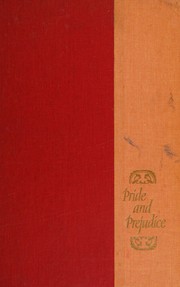

Only manually reviewed, U.S.-rights-gate-passed Gutenberg books that are Search Live can appear here. Riley Locke links to the Gutenberg ebook landing page and does not reproduce the ebook text.